


Cervical cancer is often one of the easiest types of gynaecologic cancers to prevent. If cervical cancer is discovered early, some of the best treatments are available to eliminate the potential future threat of cervical cancer. Unfortunately, however, some women overlook early warning signs of cervical cancer or fail to recognise them as being serious and wait to seek medical treatment due to being unaware of what the symptoms of cervical cancer are. Therefore, by increasing your understanding of the early signs and finding out what’s considered “normal” within your body, you may increase your chances of detecting cervical cancer when it can be treated most effectively.
As an expert in gynaecological cancer, Dr Priyanka Batra explains that women’s familiarity with their body, having regular checkups, and seeking immediate medical assistance will all help them to identify any abnormal signs of cervical cancer early enough to receive treatment when it is most successful.
In this blog, you will discover all the important early signs of cervical cancer, what causes it, who might be at risk of developing it, how cervical cancer is diagnosed and treated, as well as preventative methods.
What Is Cervical Cancer?
Cervical cancer is cancer of the cervix (the end of the uterus) that can happen over time and initially start as pre-cancerous changes to the cells in the cervix. When HPV (or Human Papilloma Virus), which is a sexually transmitted virus, creates an ongoing infection in the cervix (but generally resolves itself), there is a risk that it could develop into cervical cancer if not treated.
As a common form of female (gynaecological cancers), cervical cancer can be saved from developing if found early and treated, and it is possible to prevent the development of cervical cancer through routine screening and HPV vaccination.
What are the Early Warning Signs of Cervical Cancer?
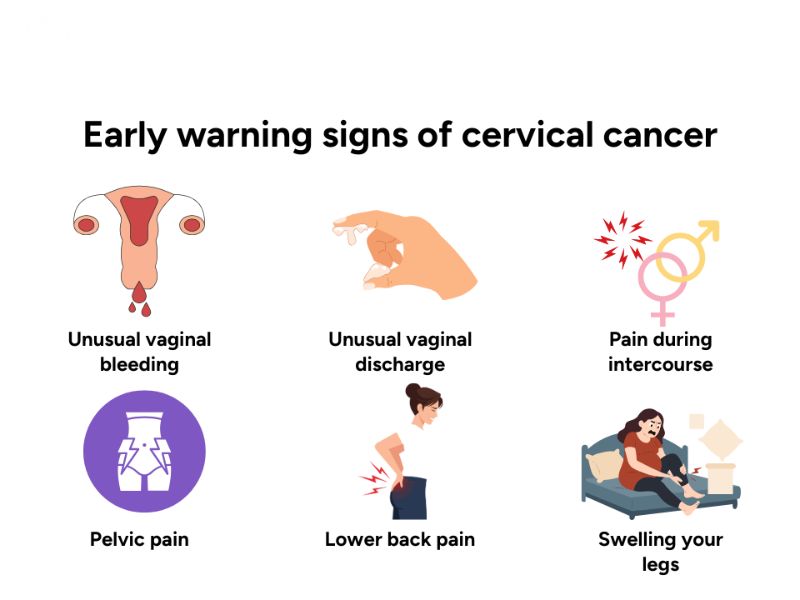
- An unusual amount of vaginal bleeding can be an early sign of cervical cancer; unusual vaginal bleeding can mean bleeding between periods, bleeding after sex, bleeding after menopause or heavy/prolonged periods.
- An unusual amount of vaginal discharge that differs from normal could also be an early indication of cervical cancer. Examples of vaginal discharge that differ from your normal discharge are excessive watery or thick discharge, excessive foul-smelling discharge, or blood-tinged or unusual colored discharge.
- Heading to a healthcare provider regarding ongoing lower abdominal pain that is not from your menstrual cycle could possibly mean there are changes to your cervix. The following symptoms might arise: excessive or persistent pain in the lower abdomen, feeling pressure in the pelvic area and uncomfortable feelings while performing your daily activities.
- Pain during sexual intercourse (known as dyspareunia) could also be related to changes in the cervix or an underlying gynaecological cancer. If you suddenly develop pain when having sexual intercourse with no known cause, make sure to contact your doctor immediately.
- As cervical cancer advances, it can spread to neighbouring tissues, leading to Increased frequency of urination, Pain with urination and Difficulty emptying the bladder. These symptoms can often be mistaken for a urinary tract infection UTI.
- Pelvic pain that is not related to menstruation may also indicate some type of change to the cervix. Some women may experience continued pain in the lower abdomen, Pressure in the pelvic area and Discomfort with daily activities. Any persistent pelvic pain should always be evaluated by a healthcare professional.
- Discomfort or pain with sexual intercourse (dyspareunia) is also associated with changes to the cervix or with gynaecological cancers. If you suddenly experience an increase in pain during intimate moments for no apparent reason, you should consult your doctor.
- A man may have persistent fatigue, low energy, or unexplained weight loss when he has advanced cervical cancer. While these symptoms are not unique to cervical cancer patients, do not dismiss them if they occur with other signs.
Survival rates and effective treatment for cancer dramatically improve with early diagnosis. Many cases of early-stage cervical cancer can be treated successfully before it spreads to surrounding areas. Regular screenings help identify pre-cancerous changes even before symptoms occur. Preventive screening is an effective method of reducing the risk for cervical cancer for specialists in women’s health, like Dr Priyanka Batra.
By identifying the early warning signs of cervical cancer, an individual may make a difference in outcomes. Abnormal bleeding and discharge from the vagina, as well as discomfort in the pelvic area, should not be ignored, and pelvic pain or discomfort during sexual intercourse should not be overlooked. Due to its place as one of the gynaecological cancers that must be treated to reduce risk factors, gynaecological cancer should be identified at an early stage and treated quickly, and screening should be a standard practice.
As a general rule, the earlier the diagnosis is recognised, the more effective the treatment will be and the better quality of life the woman with cervical cancer will have. Dr Priyanka Batra is an expert in gynaecological cancer and can provide specialised, compassionate care focused on prevention, early diagnosis, and advanced treatment of cervical cancer and other women’s cancers.